How to Rewrite Your LinkedIn Headline: A Practical Worksheet
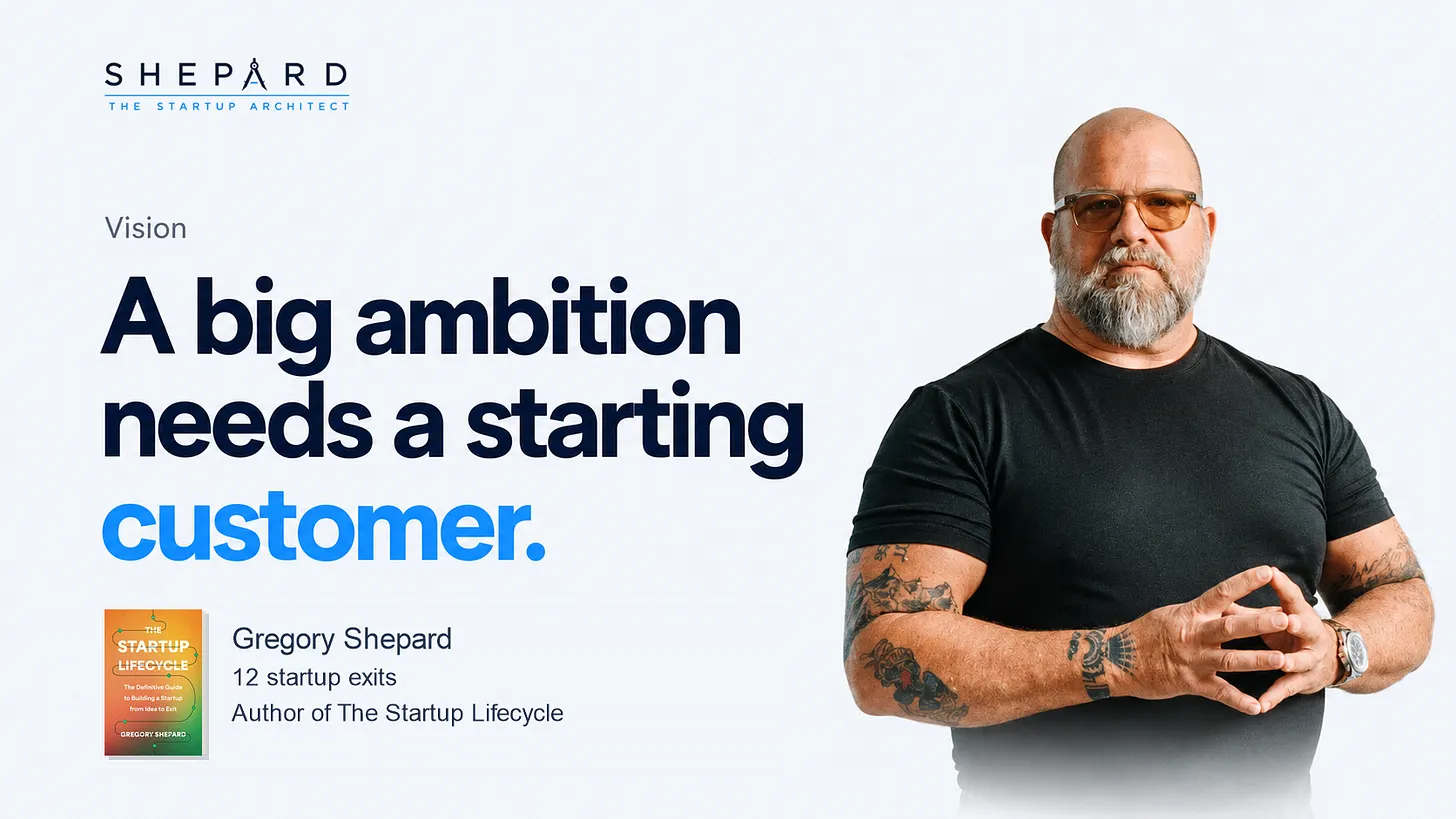
See how Gregory Shepard’s established brand, role, book and startup experience became a clearer introduction. Then work through your own headline.
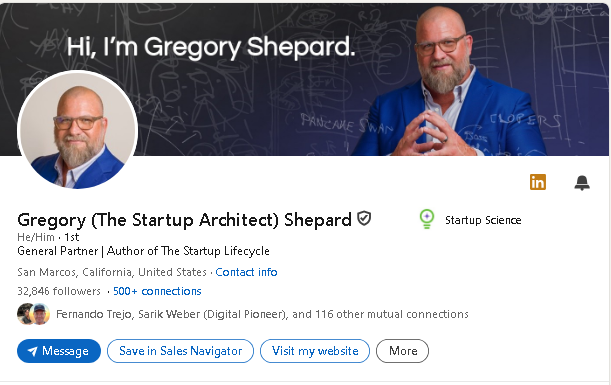
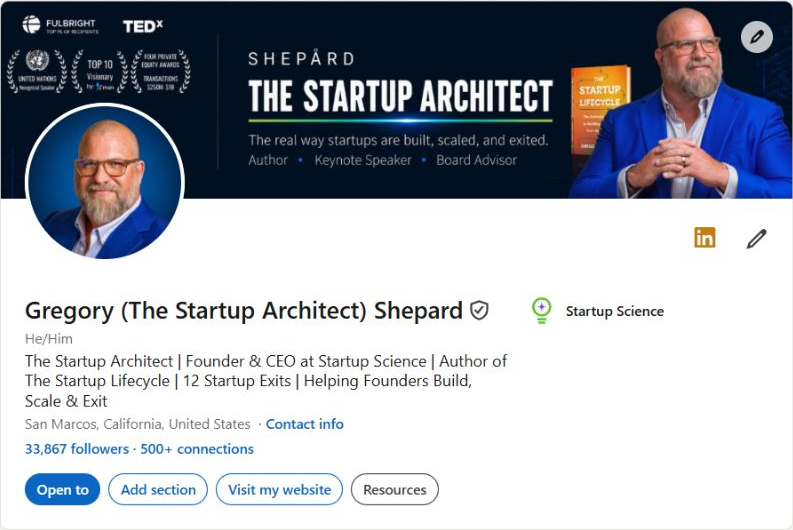
My contribution: copy and information hierarchy. Gregory’s career record and established brand supply the credibility. See the full Gregory case →
On this page
The captures above show Gregory Shepard’s original and revised profile. The worked audit explains that comparison. Here, use the same case to make decisions about your own headline.
Give each part of the headline a job
In Gregory’s revised version, The Startup Architect leads the introduction. His operating role, book and startup experience give that identity substance. The closing phrase names the founder audience and the work they are navigating.
Those pieces are doing different jobs. When you review your own headline, mark the identity, the supporting facts and the audience. If several phrases repeat the same idea, choose which one deserves the space.
Gregory’s version uses much of that space. It should not become a template that everyone fills with more titles. A narrower service may need a shorter introduction. Keep the facts that help your intended reader understand the work, and develop the rest in About, Featured or your service page.
Answer six questions before drafting
- Who needs to recognise themselves? Name the buyer or audience for this version. Gregory’s closing phrase addresses founders building, scaling and exiting.
- What should they remember? Choose the specialty or identity connecting the work. The Startup Architect was Gregory’s established identity.
- What does that mean in practice? Name the work or problem behind the identity. Avoid adding an adjective where a clear service description would help.
- What supports it? Select relevant work, experience or credentials. Gregory’s role, book and startup experience supply that support; use the evidence you actually have.
- What can leave the headline? Remove repeated titles and claims pulling the introduction toward a different audience. Keep a note of useful material for the rest of the profile.
- What should the reader investigate next? Choose a case, service page or other piece of work that develops the same introduction.
Write your answers in plain language before trying to make them fit into a headline. You are deciding what the reader needs, then editing the sentence around that decision.
Three ways to adapt the worksheet
Gregory’s example shows how an established identity can organise a broad track record. A narrower service may need a more direct introduction. These invented examples show three other editing directions; they are writing exercises, not client results.
| Starting wording | Illustrative direction | What the edit clarifies | What the profile must support |
|---|---|---|---|
| Marketing consultant; growth strategist | Fractional marketing lead for B2B software teams; positioning, launch plans and campaign delivery | The audience and the work a team could hire the person to do | Relevant positioning, planning and delivery work |
| Finance expert; helping companies succeed | Finance consultant for creative agencies; cash-flow planning and project profitability | A recognisable specialty, a market and two concrete areas of help | Relevant finance work and a clear service scope |
| Founder and CEO | Founder; client onboarding software for small agencies | What the company makes and who it serves | A product that actually serves that audience and use case |
Notice what the examples leave out: a numerical result is useful only when it is relevant and supported. A role, audience and clear description of the work can give the reader enough information to decide whether to investigate further.
Choose the direction that fits your work, then use the reader test below. The aim is a more accurate understanding of your service, not a promise that one sentence will generate calls.
Test what another person understands
Draft two versions: one led by the specialty and one led by the buyer’s problem. Keep the supporting facts consistent.
Ask someone who resembles your intended reader to explain what they think you do, who it helps and what they would investigate next. If they describe a different service or audience, revisit the message before polishing the wording.
Then check the destination. Does the profile’s next link explain that service, or does the visitor have to start working it out again?
For a real example of carrying a promise beyond one opening, see the UCW event page, social draft and email draft. They belong to the same event campaign and show how each channel can develop a consistent invitation.
Make the profile, page and first campaign tell the same story.
Once the headline is clear, the Founder Positioning Project carries that positioning into the profile, offer page and first campaign. We agree the positioning, then I write the LinkedIn profile, one offer page, three posts and one email to introduce it.
You receive editable copy and a publishing sequence, with two consolidated review rounds. Pricing is bespoke; your proposal confirms the fee and delivery schedule. Development, publishing and ongoing management are scoped separately.

Rheanne Razo
Marketing strategist and consultant working on positioning, content, campaigns and marketing delivery for founders and growing teams.
Free profile resources
Get the LinkedIn Profile Checklist
Ten practical checks for a profile that builds trust and turns views into conversations.
No spam. Unsubscribe anytime.