
One masterclass.
One clear invitation.
The Startup Lifecycle Masterclass at University Canada West, September 2026. I worked on the campaign copy, registration checks and materials for the university partner.
The event page explains the session. The social draft introduces the promise. The email draft gives the reader enough detail to consider attending.
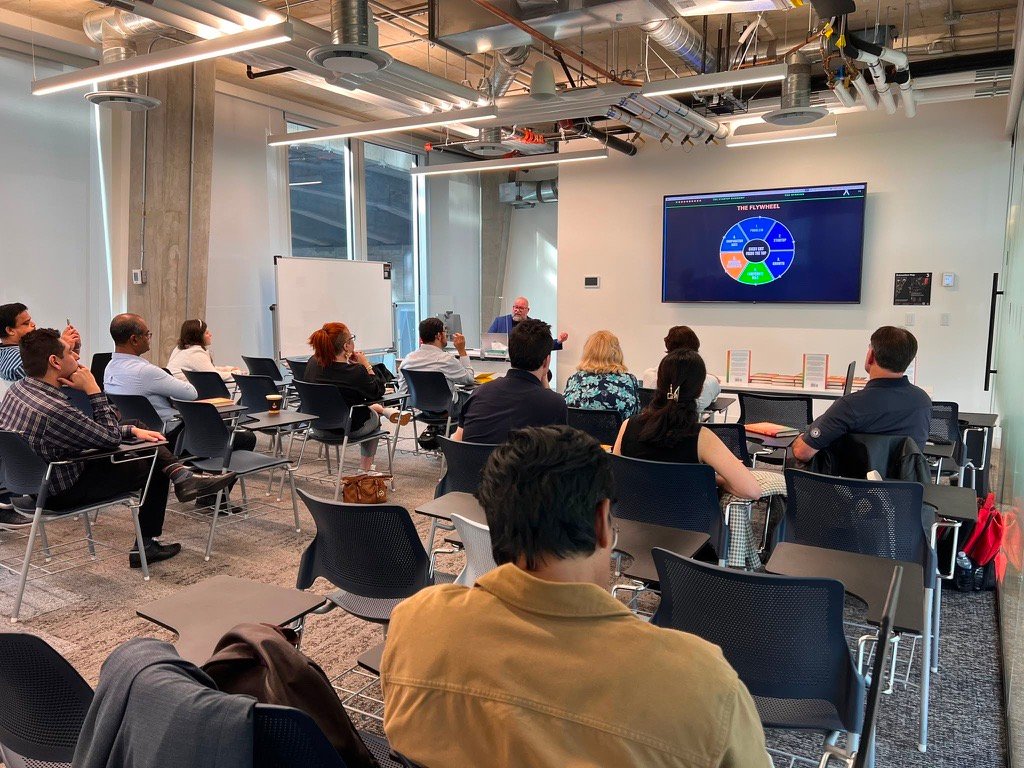
The offer page.
Explain why the session matters.
The event page starts with a founder’s problem: effort aimed at the wrong phase. It then explains what the two-hour session helps the reader understand.
The outcomes develop that promise before the agenda, speaker information and registration instructions. The page gives the invitation somewhere useful to lead.
Most founders are not short on effort. They are often doing the right work in the wrong phase.
The priorities, metrics, capital, and team decisions that fit one phase may not fit the next. This focused two-hour masterclass gives you a practical map of the seven startup-lifecycle phases so you can see where your company is now and what matters next.
What you will leave with
- A clearer view of your company's current phase and primary constraint
- A way to align priorities, capital, metrics, and team behavior with that phase
- A sharper understanding of the transition and sequencing risks ahead
- A practical next move, including what deserves attention now and what can wait
Select Register to reserve one place.
Opening and outcomes from the retained Odoo event-page copy.
The social post.
Make the invitation easy to grasp.
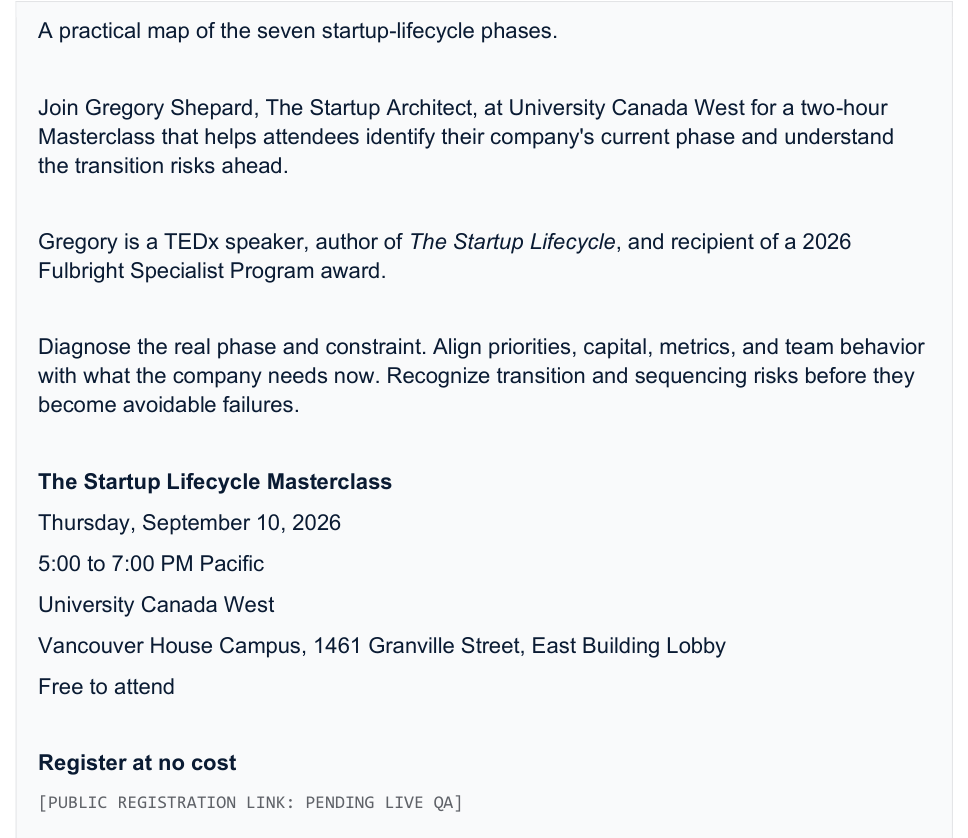
The launch-caption draft leads with the practical map, then names the speaker, setting and purpose. The reader gets the core invitation before the event details.
Its closing action is “Register at no cost.” The original draft keeps the registration link as a placeholder. The excerpt here is a historical writing sample.
A practical map of the seven startup-lifecycle phases.
Join Gregory Shepard, The Startup Architect, at University Canada West for a two-hour Masterclass that helps attendees identify their company's current phase and understand the transition risks ahead.
Diagnose the real phase and constraint. Align priorities, capital, metrics, and team behavior with what the company needs now. Recognize transition and sequencing risks before they become avoidable failures.
Register at no cost
Selected paragraphs from the LinkedIn and Facebook launch-caption draft.
See the original draft excerpt
The email.
Develop the reason to attend.
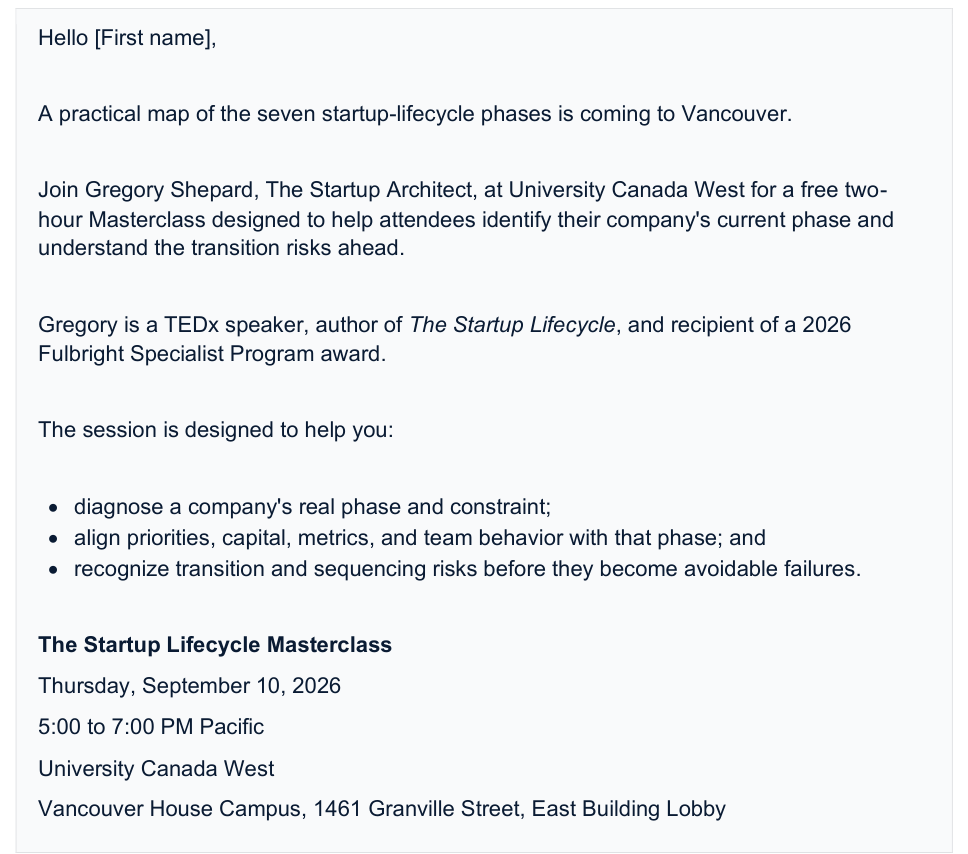
The subject puts the location and practical benefit together. The opening repeats the same promise, then the body expands it into the decisions the session is designed to help with.
The draft’s registration action matches the social invitation. Keeping the event, benefit and destination aligned gives the reader a consistent introduction across the materials.
Vancouver: A practical map of the startup lifecycle
A practical map of the seven startup-lifecycle phases is coming to Vancouver.
Join Gregory Shepard, The Startup Architect, at University Canada West for a free two-hour Masterclass designed to help attendees identify their company's current phase and understand the transition risks ahead.
The session is designed to help you:
- diagnose a company's real phase and constraint;
- align priorities, capital, metrics, and team behavior with that phase; and
- recognize transition and sequencing risks before they become avoidable failures.
Register at no cost:
Subject and selected body paragraphs from the public launch-email draft.
See the original draft excerpt
Connected copy means
a consistent next step.
The page gives the offer room to be understood. The post introduces it in a feed. The email develops the invitation for an inbox. Each keeps the same practical promise and points toward registration.
This was event-campaign work. The Founder Positioning Project applies that connection to one service: agree the message, explain it on the profile and offer page, then introduce it through a short post-and-email sequence.
Make the profile, page and first campaign tell the same story.
The Founder Positioning Project starts with one founder, one service and one audience. We agree the positioning, then I write the LinkedIn profile, one offer page, three posts and one email to introduce it.
You receive editable copy and a publishing sequence, with two consolidated review rounds. Pricing is bespoke; your proposal confirms the fee and delivery schedule. Development, publishing and ongoing management are scoped separately.